
Keep Your Power On When the Grid Goes Down
Standby and backup generator installation for homes and light commercial properties in Pinckneyville, Illinois and surrounding areas.
When the power goes out in Pickneyville, Nashville, Sparta, or a surrounding area, you lose more than just lights. Your heating system stops running, your refrigerator warms up, and if you work from home or depend on medical equipment, the outage becomes a serious problem. A standby generator kicks on automatically when it detects a loss of power, and it keeps your essential circuits running until the grid comes back online. You do not have to flip a switch or drag out extension cords, and you do not have to leave your home to find a warm place to wait it out.
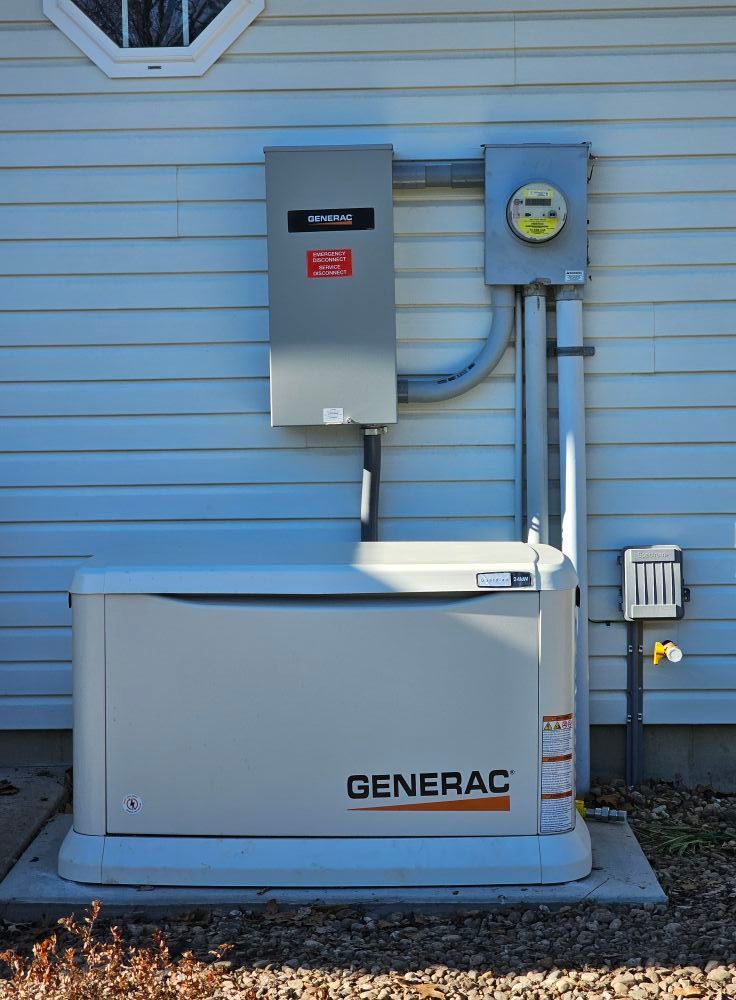
Kuhnert Electric & General Maintenance installs standby and backup generator systems for residential and light commercial properties, including the generator unit, transfer switch, and integration with your existing electrical panel. The transfer switch is what allows the generator to take over safely without backfeeding the grid, and proper sizing ensures that your critical circuits receive enough power without overloading the unit. This service is ideal for rural areas and outage-prone locations in Pinckneyville where power interruptions are more common. You also receive guidance on generator sizing and placement to make sure the unit fits your property and meets local codes.
If you want to protect your home or business from extended outages in the Pinckneyville area, contact us to discuss generator options and installation timelines.
What Goes Into a Full Generator Installation
Generator installation in Pinckneyville starts with determining which circuits you want to keep powered during an outage and calculating the total load those circuits will draw. The generator is then sized to handle that load, and a transfer switch is installed between your main panel and the generator. The transfer switch monitors the grid and automatically switches to generator power when it detects a loss of utility service.
Once the installation is complete, you will have a system that starts on its own within seconds of an outage and shuts down automatically when grid power returns. Proper integration with existing electrical panels means the generator only powers the circuits you have selected, and the transfer switch prevents any dangerous backfeed into utility lines. You will also notice that the generator is mounted on a concrete pad outside your home, positioned to meet clearance requirements and reduce noise.
This service includes the generator unit, transfer switch installation, electrical connections, and basic startup testing. It does not include fuel line installation for natural gas or propane units, but that work can be coordinated with a licensed plumber or gas technician. Generator installations typically take one to two days depending on the complexity of the electrical panel and the location of the unit on your property.
Most people want to know about sizing, fuel, and maintenance.
Before installing a generator, homeowners and business owners usually ask how to size the unit correctly, what type of fuel it should use, and how often it needs to be serviced once it is up and running.
Kuhnert Electric & General Maintenance installs generators that start automatically, integrate safely with your electrical system, and keep your home or business running during outages. If you are ready to add backup power to your property in Pinckneyville, get in touch to discuss sizing and placement options.