
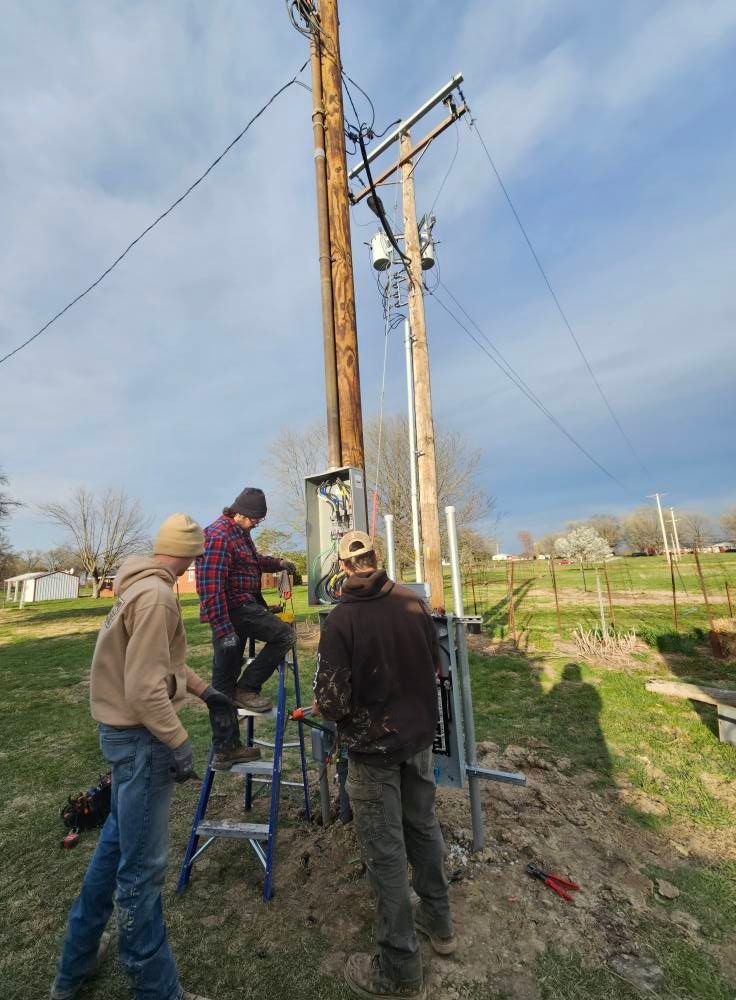
Underground Lines Installed the Right Way
Professional utility trenching for electrical service runs and new construction in Pinckneyville, Illinois and nearby communities.
When you need to run electrical service underground, whether for a new building, a detached garage, or a service upgrade, the trench has to be dug to the correct depth and the conduit has to be placed and protected properly. In Pinckneyville, Nashville, Steeleville or a surrounding area, soil conditions and local codes determine how deep the trench needs to be and what type of conduit and backfill material should be used. A trench that is too shallow or improperly backfilled can lead to damaged lines, failed inspections, and costly rework.
Kuhnert Electric & General Maintenance handles utility trenching for underground electrical runs, including digging, conduit placement, backfill, and coordination with electrical installations. The trench is measured and dug to meet code requirements, and the conduit is laid in a way that protects the wiring from ground movement and moisture. This service supports new construction projects, service panel upgrades, and any situation where you need power delivered underground instead of overhead. You get a clean, compliant installation that passes inspection and holds up over time.
If you are planning a project in Pinckneyville that requires underground electrical service, get in touch to go over site conditions and scheduling.
How Trenching Works from Layout to Backfill
Utility trenching in Pinckneyville starts with marking the path and confirming that no existing underground utilities are in the way. The trench is dug to the depth required by local electrical code, and rigid or flexible conduit is placed at the bottom before any wiring is pulled through. After the conduit is secured and the electrical lines are installed, the trench is backfilled in layers and compacted to prevent settling.
Once the work is finished, you will see a level surface where the trench was dug, and the electrical service will be safely routed underground. Safe, clean job sites from start to finish mean you do not have to deal with leftover materials or poorly graded areas. If you are adding a detached structure or upgrading your main service, this process keeps the wiring protected and your property looking clean.
This service includes trenching, conduit installation, and site cleanup, but it does not include the electrical wiring itself unless coordinated as part of a larger project. Trenching can be scheduled independently or in conjunction with panel upgrades, generator installations, or new construction electrical work.
You probably want to know about depth, timing, and site prep.
Most people ask how deep the trench needs to be, how long the job takes, and whether existing landscaping or driveways will be affected by the work.
Trench depth depends on the type of conduit and local code requirements, but most residential electrical runs require a depth of 18 to 24 inches. The electrician will confirm the exact depth based on your project and location in Pinckneyville.
Kuhnert Electric & General Maintenance provides utility trenching that meets code, protects your wiring, and keeps your property clean throughout the process. If you need underground electrical service installed in Pinckneyville, reach out to discuss your project and get a clear timeline.